
 By
By 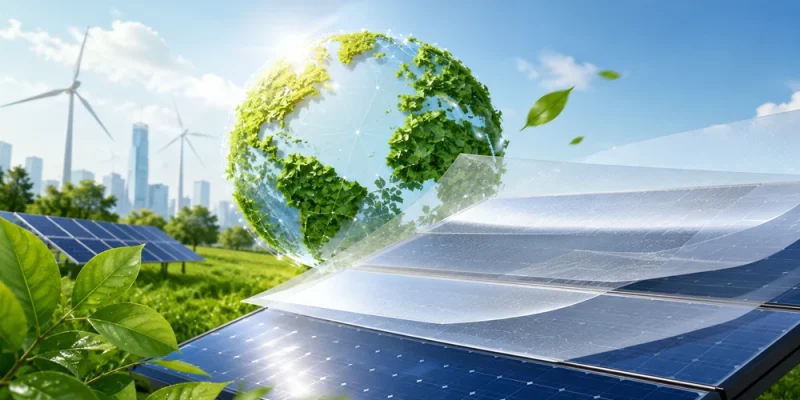
As the global transition to renewable energy accelerates, solar power has become one of the most effective solutions for reducing greenhouse gas emissions. However, the sustainability of solar energy depends not only on how much clean electricity solar panels generate but also on how they are manufactured and how long they remain in service.
This is where low-carbon innovation in PV encapsulation materials plays an increasingly important role.
Traditionally, discussions about solar technology have focused on improving cell efficiency. Today, the industry is shifting toward a broader perspective-reducing the lifecycle carbon footprint of photovoltaic (PV) modules while maximizing their durability and energy output. Advanced encapsulation materials are becoming a key driver of this transformation.
Why Encapsulation Materials Matter for Carbon Reduction
Encapsulation films protect solar cells from moisture, UV radiation, temperature fluctuations, and mechanical stress throughout a module’s lifetime. Although these materials represent only a portion of a PV module’s total weight, they have a significant influence on its long-term performance and environmental impact.
High-quality encapsulation materials contribute to lower carbon emissions by:
- Extending module service life beyond 30 years
- Reducing power degradation over time
- Minimizing failures caused by moisture ingress and delamination
- Lowering replacement and maintenance requirements
- Increasing the lifetime energy yield of solar installations
When a solar module continues producing electricity efficiently for decades, the carbon emissions associated with manufacturing are distributed across much greater energy production. In other words, longer-lasting modules have a lower carbon footprint per kilowatt-hour generated.
Material Innovation Beyond Traditional EVA
Ethylene Vinyl Acetate (EVA) has long been the dominant encapsulation material in the photovoltaic industry. While EVA solar film remains widely used, modern high-efficiency solar technologies have created demand for materials with improved durability and lower environmental impact.
New-generation encapsulation solutions-including POE (Polyolefin Elastomer), EPE composite films, and functional encapsulation films-offer several sustainability advantages:
- Better moisture resistance for humid environments
- Lower Potential Induced Degradation (PID)
- Improved UV stability
- Enhanced compatibility with TOPCon, BC, HJT, and perovskite solar cells
- Longer module reliability under harsh climates
By reducing degradation and extending operational life, these advanced materials help maximize the environmental value of every installed solar panel.
Manufacturing with a Lower Carbon Footprint
Low-carbon innovation is not limited to product performance. Manufacturers are also rethinking how encapsulation materials are produced.
Key initiatives include:
- Optimizing production processes to reduce energy consumption
- Increasing material utilization to minimize manufacturing waste
- Developing low-emission resin formulations
- Improving process automation to enhance production efficiency
- Implementing renewable energy in manufacturing facilities
These improvements reduce emissions throughout the supply chain while maintaining consistent product quality.
For PV manufacturers pursuing Environmental, Social, and Governance (ESG) objectives, sourcing encapsulation materials from suppliers with sustainable manufacturing practices has become an increasingly important consideration.
Supporting the Circular Economy
Solar modules are designed for decades of operation, but eventually they reach the end of their service life. The industry is therefore placing greater emphasis on circular economy principles.
Advanced encapsulation materials can contribute by:
- Improving long-term material stability
- Reducing premature module disposal
- Supporting future recycling technologies through optimized material design
- Increasing the overall resource efficiency of photovoltaic systems
The most sustainable solar panel is often not the easiest to recycle-it is the one that performs reliably for the longest period before replacement becomes necessary.
Reliability Is Sustainability
One misconception is that sustainability depends solely on using “green” materials. In reality, reliability is one of the most powerful forms of sustainability.
A solar module that fails after 15 years consumes the same raw materials, manufacturing energy, transportation resources, and installation labor as one designed to last 30 years. The difference lies in how much clean electricity each module ultimately produces.
This is why high-performance encapsulation materials are increasingly viewed as strategic investments rather than simple protective components. They directly influence module lifespan, energy yield, maintenance costs, and lifecycle environmental performance.
Looking Ahead
The future of photovoltaic technology will be defined not only by higher conversion efficiencies but also by smarter material innovation. As next-generation solar cells-including BC, TOPCon, HJT, and tandem perovskite technologies-continue to evolve, encapsulation materials must deliver higher reliability while supporting lower-carbon manufacturing.
For solar manufacturers, project developers, and investors alike, selecting advanced encapsulation materials is becoming an important step toward building more sustainable energy systems.
Ultimately, low-carbon innovation in PV encapsulation materials is about creating solar modules that last longer, perform better, and deliver more clean electricity with fewer environmental impacts throughout their entire lifecycle. By combining material science with sustainability, the photovoltaic industry can move closer to its ultimate goal: providing affordable, reliable, and truly green energy for generations to come.









Comments